
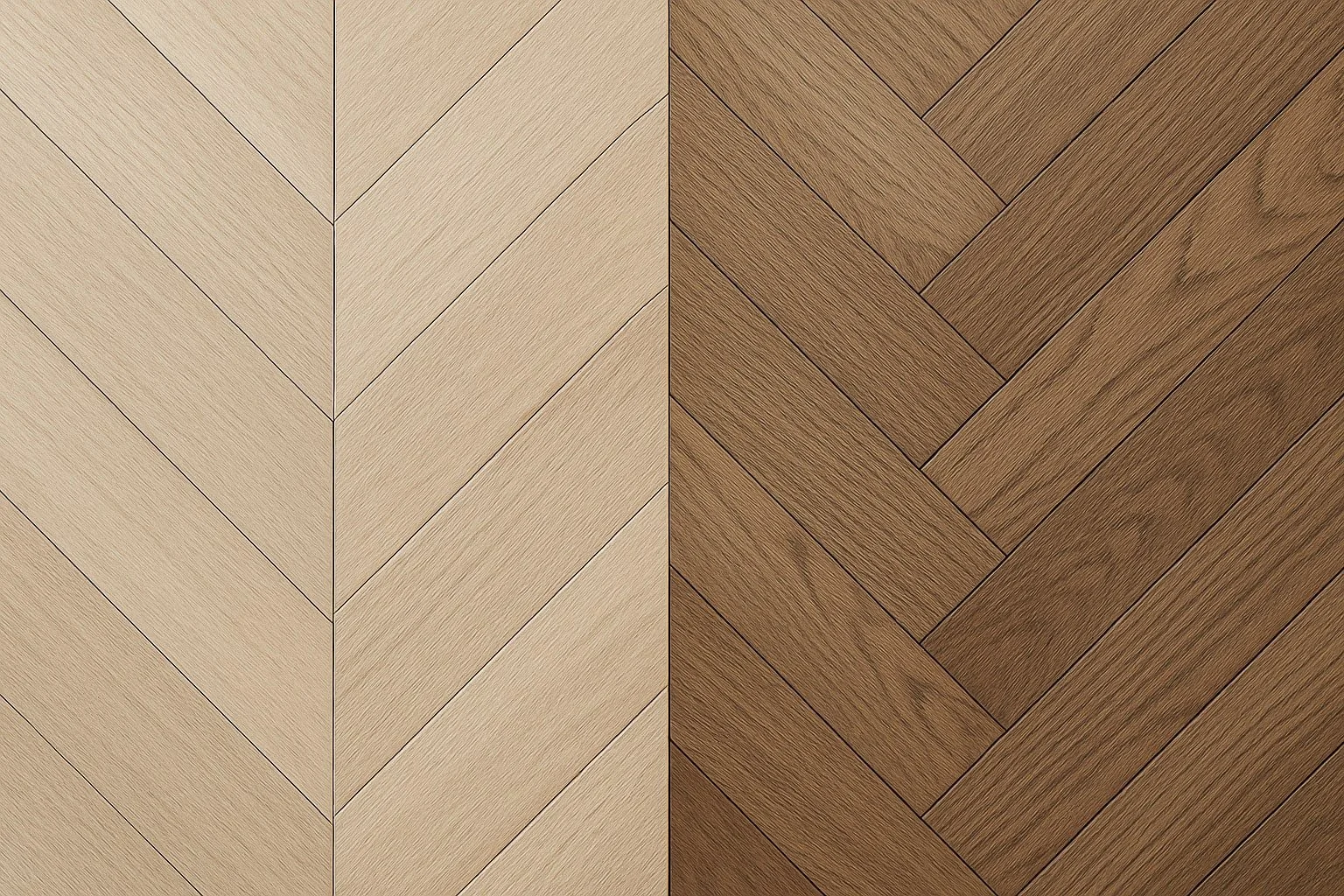
Chevron vs Herringbone: What’s the Difference?
When it comes to elevating a space, few flooring styles make a statement quite like chevron and herringbone. Both patterns have deep European roots and are favourites in luxury interiors, but despite looking similar at a glance, they deliver very different aesthetics. Understanding their differences will help you choose the perfect option for your home or commercial project.
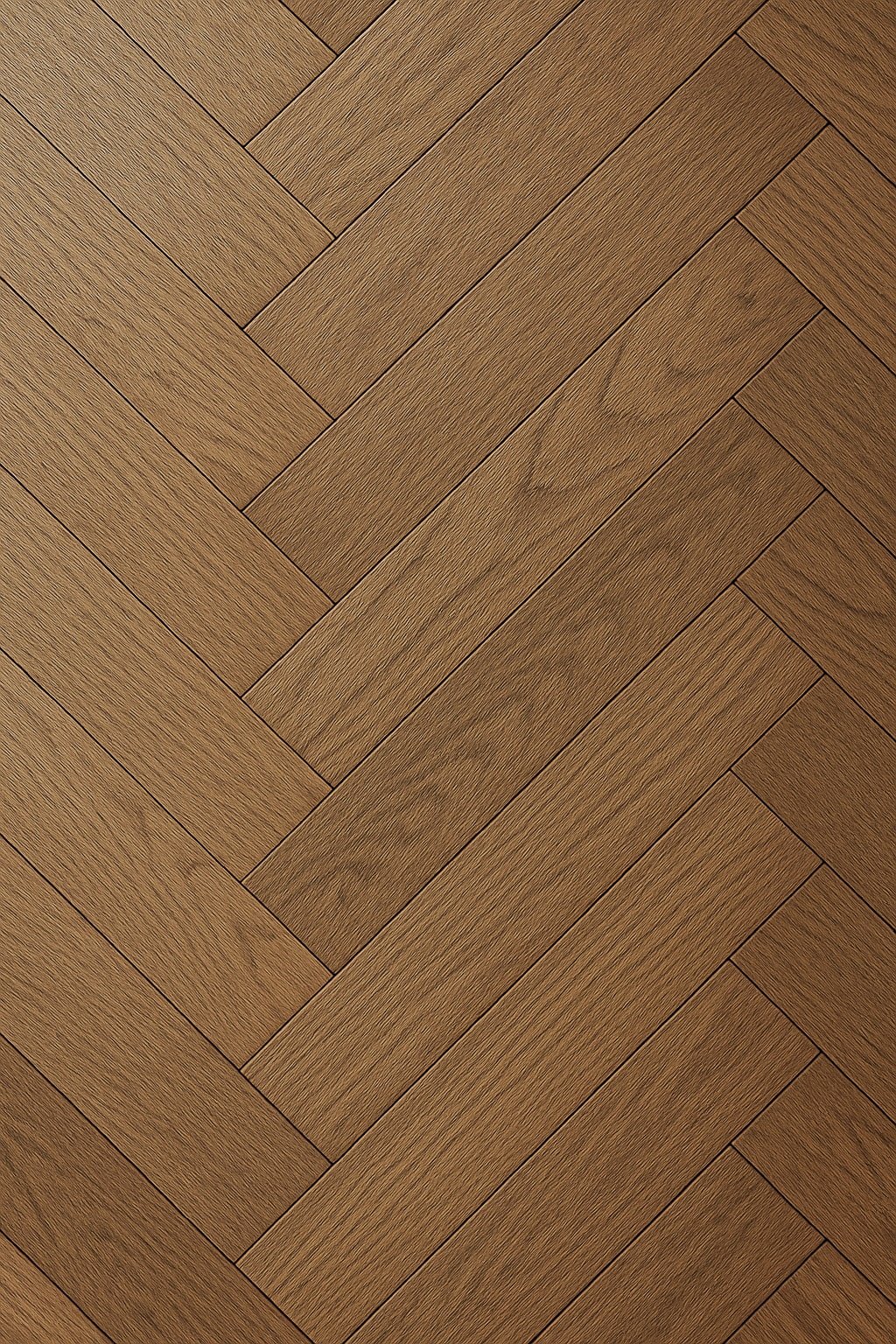
What Is Herringbone Flooring?
Herringbone is the more traditional of the two patterns, dating back hundreds of years and often seen in classic European apartments, heritage villas, and luxury hotels.
How It’s Laid
Each board is cut as a rectangle, with ends at 90 degrees.
Boards are installed in a zigzag pattern, where the end of one board meets the side of the next.
This creates a broken “V” shape that feels textured, warm, and timeless.
Why Choose Herringbone
Classic and elegant – ideal for traditional or transitional interiors.
Adds movement and richness to a room.
Visually softens a space due to the staggered pattern.
Works beautifully with oak, especially in neutral or warm tones.
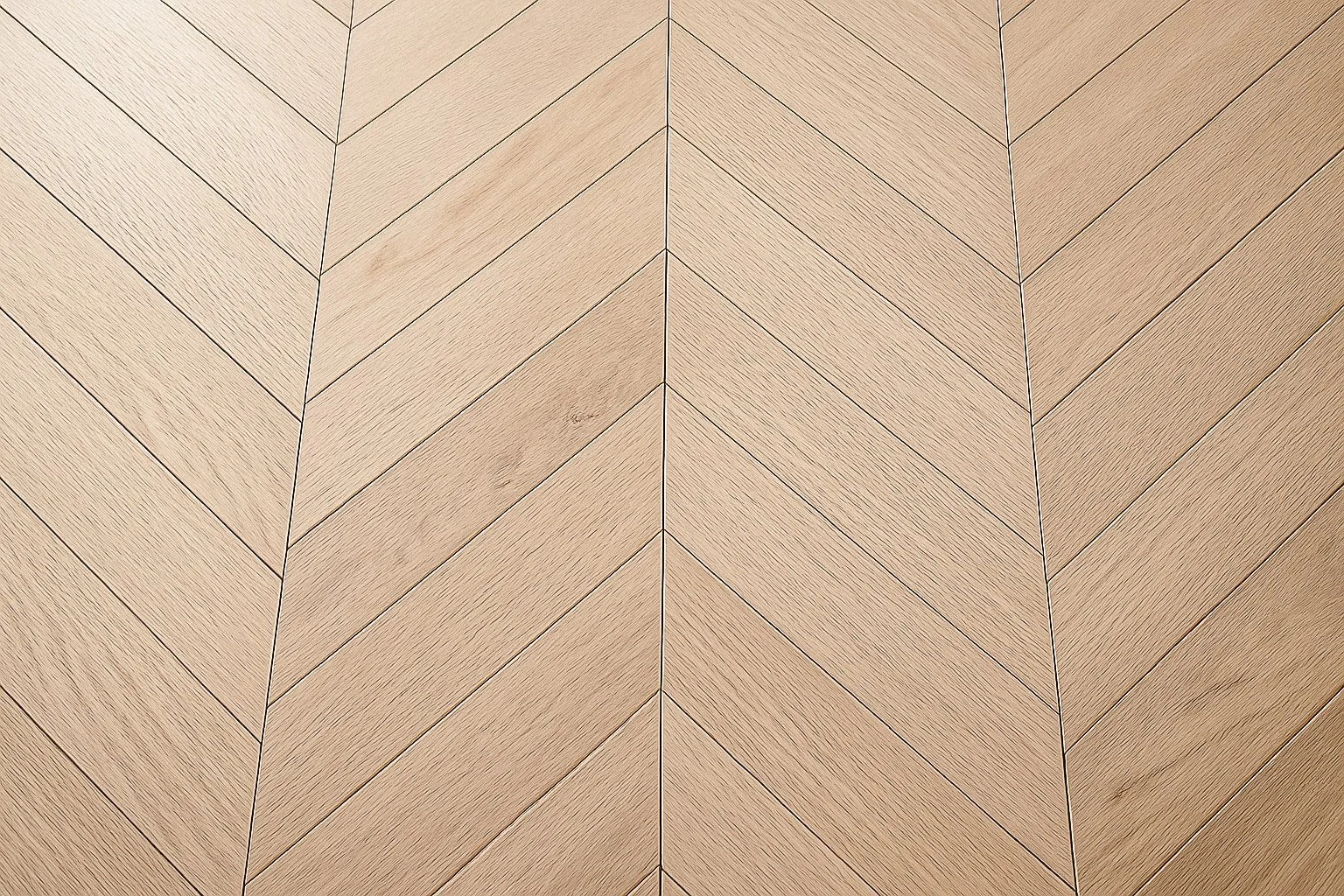
What Is Chevron Flooring?
Chevron flooring is the modern, sophisticated cousin of herringbone.
How It’s Laid
Boards are cut at an angle—usually 35°, 45°, or 60°.
These angled ends meet cleanly to create a perfect, continuous “V” pattern.
The result is sharp, directional, and geometric.
Why Choose Chevron
Contemporary, refined, and luxurious appearance.
Creates a clean, continuous flow that can elongate or widen a room.
Perfect for modern homes, minimalist interiors, and high-end commercial spaces.
Offers a sense of precision and symmetry.
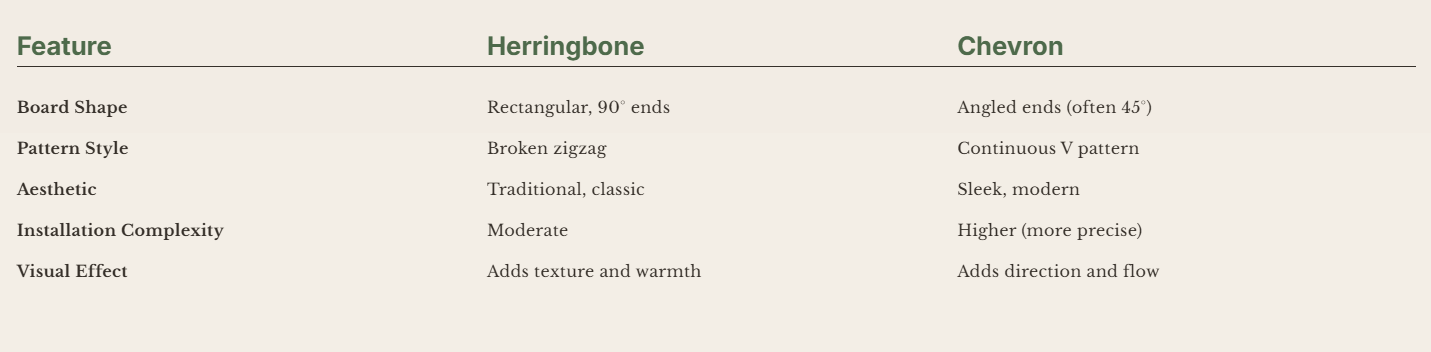
Which Pattern Should You Choose?
Choose Herringbone if you want:
A timeless European feel
Visual texture and depth
A design suited to villas, character homes, or rich interiors
A softer, more layered look
Choose Chevron if you want:
A modern, sophisticated edge
Clean lines and striking geometry
A design that enhances long hallways or wide spaces
A premium, high-impact visual statement
Cost and Installation Considerations
Both patterns require more labour than straight-laid planks, but:
Chevron typically costs more due to precision cutting and alignment.
Herringbone can be slightly more forgiving but still requires an experienced installer.
Subfloor preparation is crucial for both, especially for engineered flooring being direct-stuck to concrete.
At Timber Flooring Specialists, we install both patterns using premium European Oak—prefinished or finished on site—ensuring accuracy, durability, and a flawless finish.
Final Thoughts
Whether you choose chevron or herringbone, both patterns elevate a home from simple to stunning. The right choice comes down to your style, the architecture of the space, and how bold or classic you want the final look to be.
If you’re unsure which pattern suits your project, we can help you compare samples and provide pricing based on square metres and product options.