
Timber Grades: What’s the Difference?
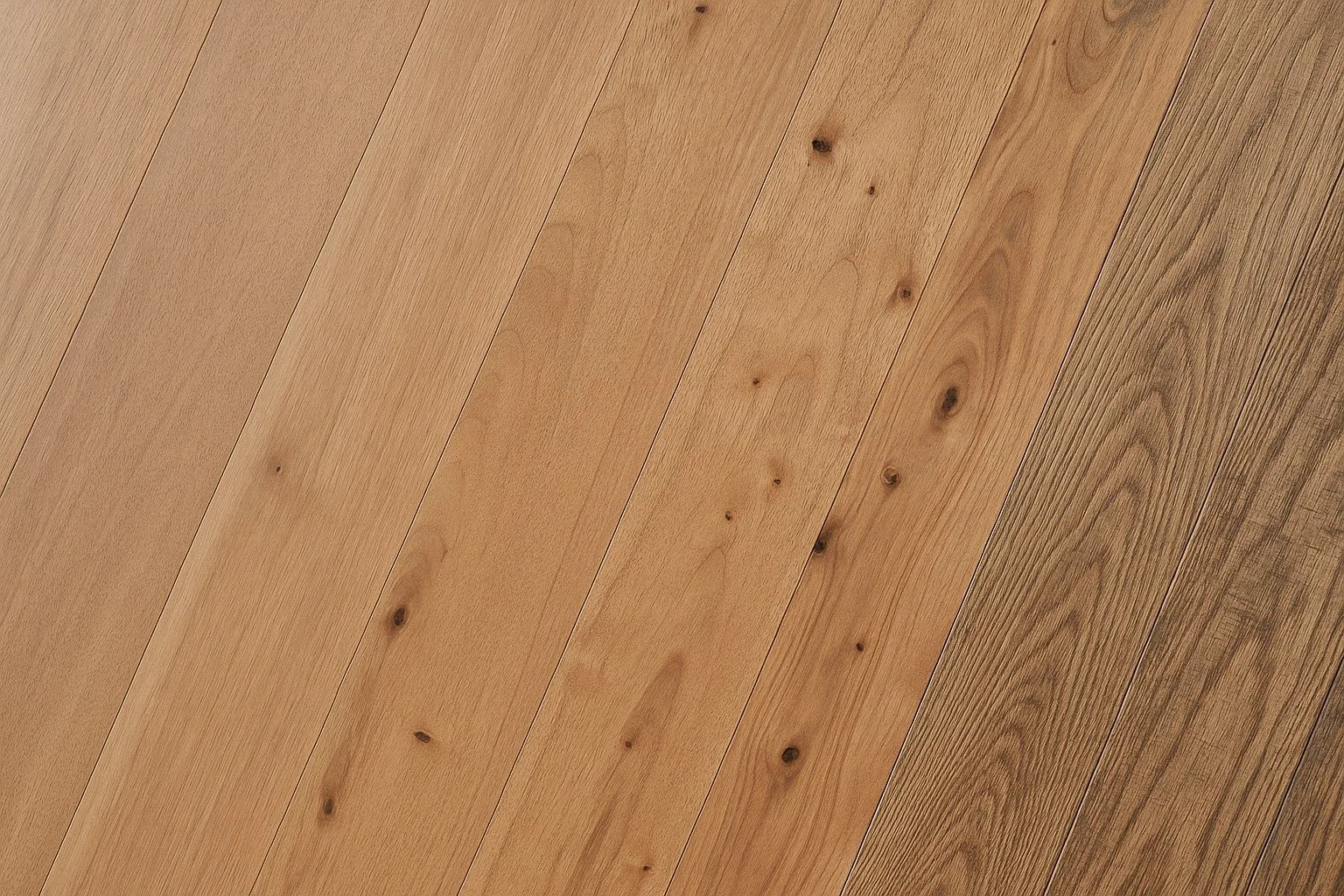
Timber grades describe the visual character of a floor - basically how many natural features you’ll see in the boards. It’s about appearance, not strength. Every grade is structurally suitable for flooring.
Because timber is natural, all floors will show some variation. Grading just helps you choose how clean or character-rich you want the final look.
Common grades you’ll hear
Select / Prime / Clear
Clean and consistent with minimal knots or gum. Great for modern, refined interiors.
Light Feature / Character
A balanced, natural look. Small knots and gentle grain variation — one of the most popular choices.
Rustic / Heavy Feature
Bold and full of personality. Larger knots, gum veins, stronger grain and colour movement.
Reclaimed / Heritage
Highly varied and unique. Heavy natural marking and strong character for statement floors.
Quick things to know
Grades don’t control colour. Colour variation comes from the species and where it grows.
Lower grade doesn’t mean lower quality. It just means more visible character.
Damaging defects aren’t allowed in any grade (splits, decay, insect damage).
Installation affects the overall look. If you have layout preferences, tell your installer early.
Selection tip:
Don’t judge by a single plank. Looking at one board in isolation can be misleading. A floor is a field of timber, not a sample strip.
We always recommend viewing multiple long planks or asking for a small sample pack. It gives you a truer picture of how that grade will feel once installed.