
10 Signs It Is Time To Replace Your Timber Floor
Timber floors are built to last - that’s why we love them. But even the best floor reaches a point where a simple recoat or sand-and-finish won’t bring it back. The tricky part is knowing when you’ve crossed that line.
Below are 12 clear, real-world signs we see on site that usually mean replacement is the smarter (and often cheaper) long-term option. If you’re unsure, think of this list as a “gut check” before you pour money into repairs that won’t hold.
1. The boards are badly warped, cupped, or crowned
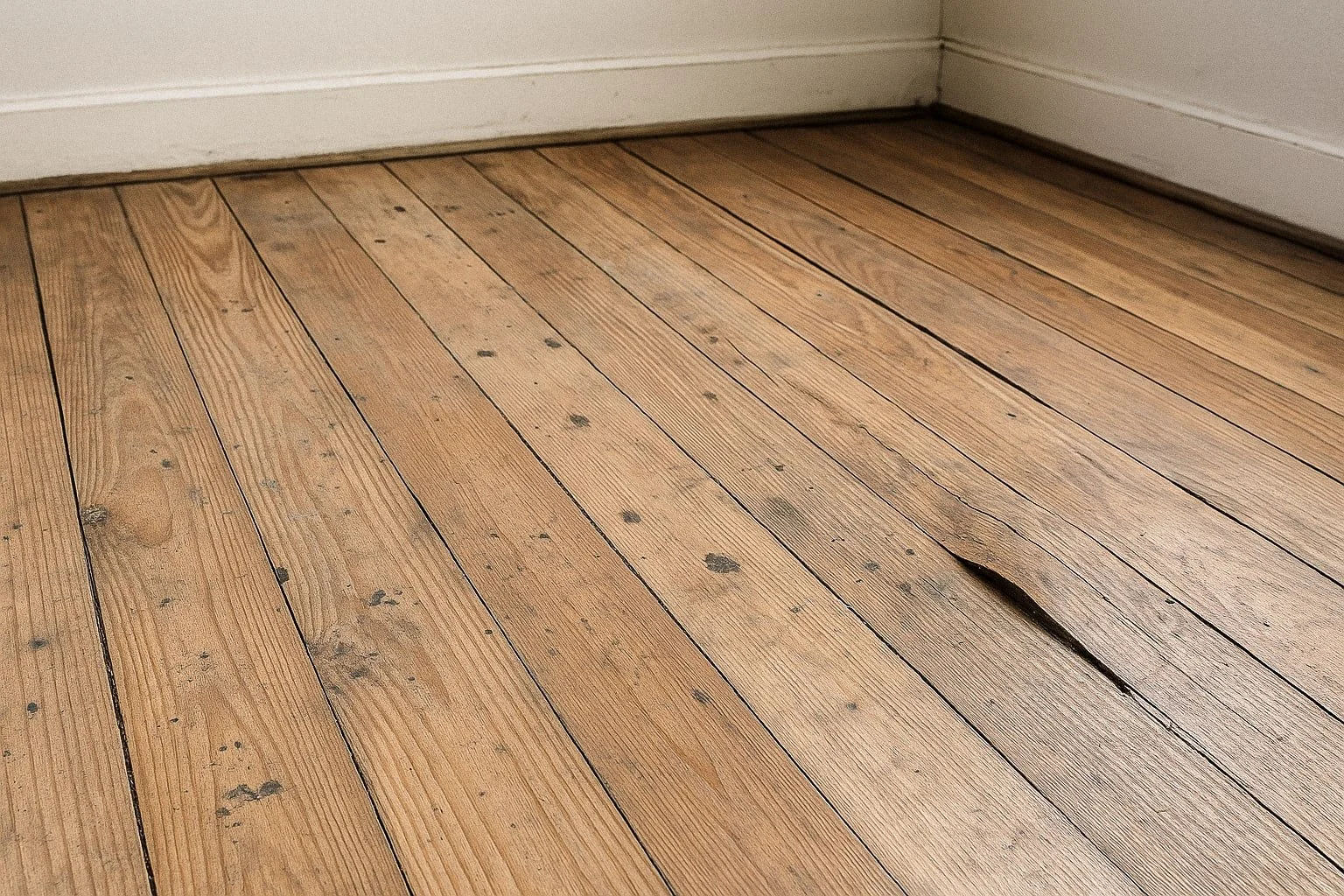
A little seasonal movement is normal. But if boards are permanently dished (cupping), domed (crowning), or wavy underfoot, it usually points to ongoing moisture imbalance or failure in the floor system. Once timber has distorted past a certain point, sanding won’t flatten it without thinning the wear layer too much.
What it looks/feels like: ridges along board edges, a washboard surface, or a visible “U”/“∩” profile in planks.
2. There’s widespread water damage
If water has soaked into the floor for long enough, you’ll often get swelling, staining, softened fibres, or delamination (especially in engineered floors). Localised damage can sometimes be patched - but broad, old, or repeated water exposure usually means replacement.
Common causes: slow dishwasher leaks, pipe drips, fridge lines, wet concrete slabs, or floods.
3. Deep gouges, cracks, or missing chunks keep appearing
Surface scratches are normal wear and tear. But deep gouges, splits, and broken edges that affect lots of boards tend to indicate the timber is too thin, too brittle, or structurally compromised. If repairs would cover a big area, a new floor gives a better, more uniform result.
4. Large areas feel soft, bouncy, or sagging
Timber should feel firm. If sections bounce, dip, or feel spongy, the problem is often in the subfloor - rot, moisture, pests, or structural movement. Recoating won’t fix that. If multiple areas are affected, replacement (plus subfloor repair) is usually the right call.
5. Termite or borer damage
Insect damage can hollow boards from within. You might see tiny holes, powdery dust, or boards that sound hollow when tapped. Once infestation is established in a floor, replacement and treatment are often necessary.
6. Gaps keep growing between boards
Small hairline gaps can happen with seasonal humidity shifts. But wide, worsening gaps usually mean the boards are shrinking beyond normal movement, or the floor is no longer stable. That can be from moisture problems, heat sources, or poor installation. Refurbishing won’t reverse it.
7. Big sections are lifting or “tenting”
If boards are buckling upward, pushing against each other, or lifting off the subfloor, you’re looking at severe moisture stress or adhesive failure. Once a floor has tented, it rarely settles back flat in a safe, permanent way.
8. Stains or discolouration go all the way through
Surface stains can often be sanded out. But if pet urine, sunlight bleaching, or water marks have penetrated deep into the timber, sanding may only lighten them — not remove them. If the look bothers you and it’s widespread, replacement is a better aesthetic reset.
9. Repairs would cover more than a third of the floor
Here’s a practical rule: when ~30% or more of a floor is damaged, replacing is typically more cost-effective and looks far better than patchwork repairs. You avoid mismatched colour, uneven levels, and chasing problems across time.
10. You want a totally different look or layout
Sometimes the floor is “fine”… you just don’t like it anymore. Moving from narrow strip to wide plank, changing species/colour, or switching to patterns like herringbone or chevron is a valid reason to replace. A recoat can’t change board size or layout.
Refinish, Recoat, or Replace?
Recoat if the timber is sound and you mainly have dullness or light surface wear.
Refinish if the timber is sound but has deeper scratches or patchy colour.
Replace if the timber itself is unstable, too thin, or deeply damaged.
If you’re seeing a couple of these signs, it’s worth getting a proper assessment before spending money on a repair that won’t last.